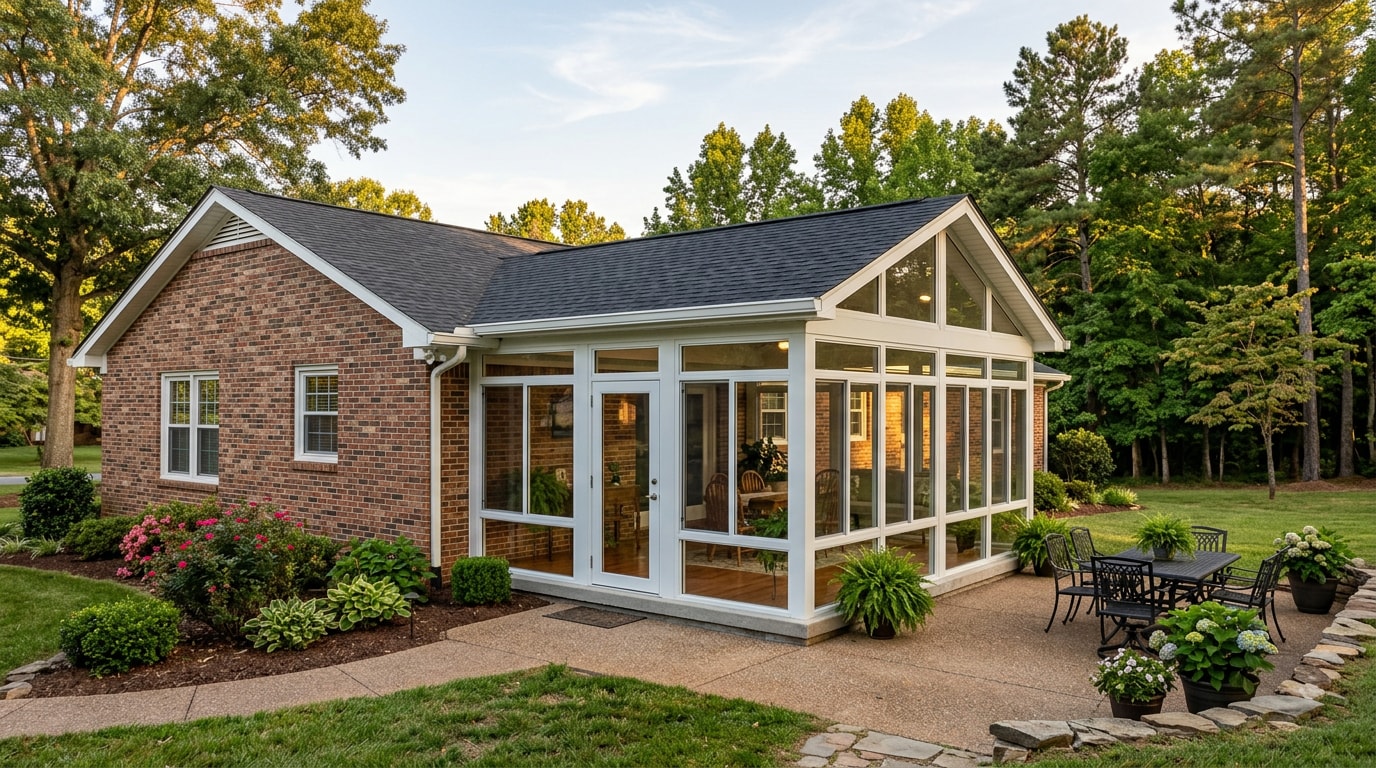
A sunroom extension in Soddy Daisy, TN gives you extra living space without the price tag of a full home addition. Homeowners near Lake Chickamauga and the Tennessee River use these rooms to capture water views, add natural light, and stretch their living space while keeping out humidity, pollen, and bugs. This guide covers the main sunroom types, 2026 cost ranges, foundation choices, and the local permit rules you need before signing a contract.
Sunroom Types for Soddy Daisy, TN Homes
The type of sunroom you choose drives your design, your permit scope, and your budget. Most homeowners in this part of Hamilton County pick from three categories.
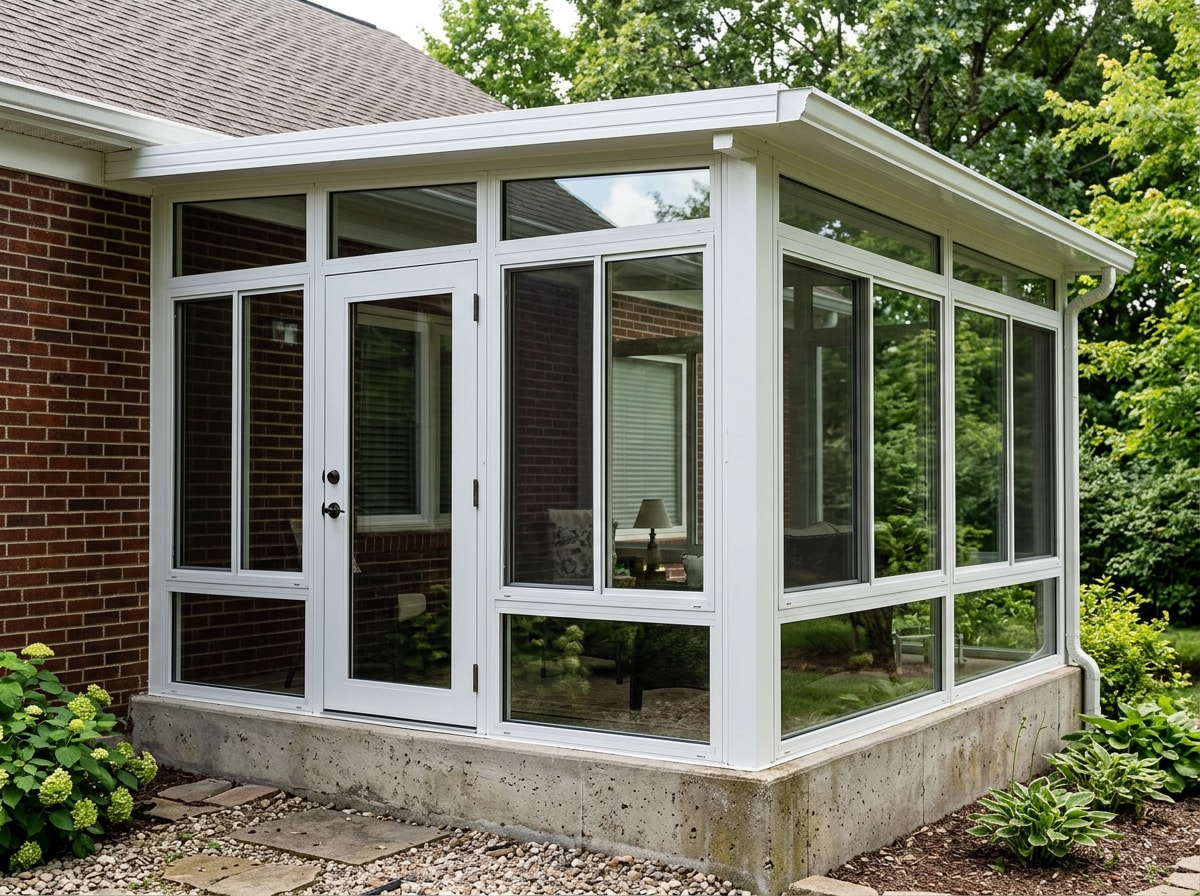
Screened porch or porch enclosure. This is the simplest option. Screens or glass panels block insects and debris, but there's no insulation or HVAC tie-in. It works well for grilling areas, casual seating, or a reading nook during spring and fall evenings.
Three-season room. This adds windows and some weatherproofing but still skips full insulation. Given East Tennessee's mixed-humid climate, that typically means comfortable use from spring through early fall, with summer humidity and winter cold limiting the room the rest of the year.
Four-season room (all-season sunroom). This version is insulated and tied into your home's HVAC system, making it true conditioned living space year-round. Glazing quality matters more here than most homeowners expect. In Hamilton County's climate zone, low-E glass with argon fill cuts heat gain in July and heat loss in January. Low-E glass reflects heat energy either into or out of the house, which enhances insulation , and it also reflects UV light away from the house, protecting furnishings from fading . The federal government's window-buying guidance explains what glazing specs to request from your builder before construction starts, which you can review on the Department of Energy's window efficiency page.
If you want to see finished local examples before deciding on a type, browse our home additions page or check recent builds on our projects page.
What Does a Sunroom Extension Cost in Soddy Daisy, TN?
Cost depends on sunroom type, square footage, and foundation. National cost guides put the overall range for a sunroom addition between roughly $100 and $350 per square foot installed, with three-season rooms on the lower end and four-season rooms running higher once HVAC and insulation enter the budget. A sunroom addition costs $100 to $350 per square foot installed on average, with 3-season rooms running $80 to $230 per square foot and custom 4-season sunrooms running $200 to $400 per square foot .
| Sunroom Type | Typical Cost Per Sq. Ft. | Typical Total Project Cost |
|---|---|---|
| Screened porch / enclosure | $60 - $150 | $10,000 - $30,000 |
| Three-season room | $80 - $230 | $10,000 - $45,000 |
| Four-season room | $200 - $400 | $25,000 - $120,000 |
These are national figures. Hamilton County and greater Chattanooga labor rates, material lead times, and contractor demand will shift your actual quote up or down. Window upgrades, framing material (vinyl versus aluminum), and electrical or HVAC extension work all affect the final number beyond base square footage.
Foundation: The Cost Driver Most Homeowners Underestimate
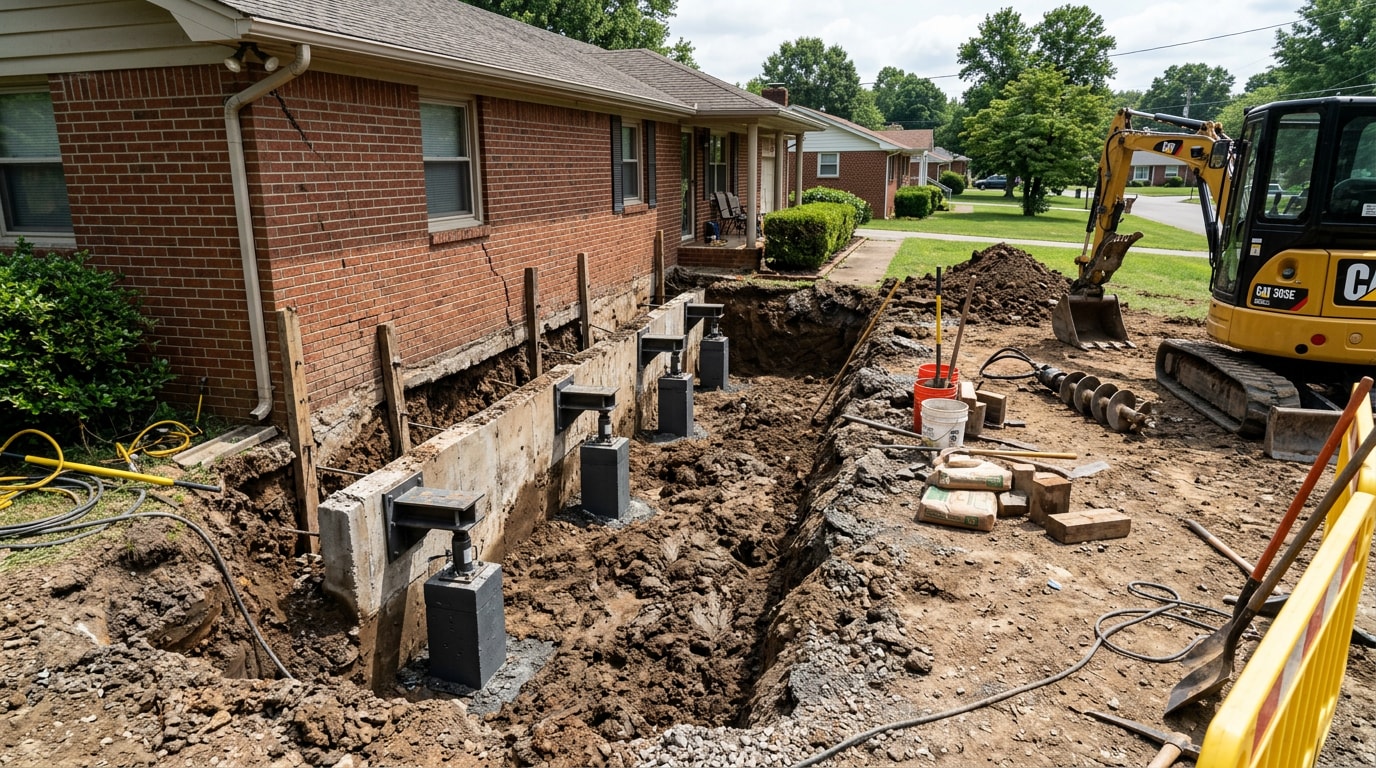
Foundation choice often swings a sunroom budget more than square footage alone. A concrete slab-on-grade foundation runs roughly $4 to $7 per square foot plus excavation and grading, while concrete or helical piers run $8 to $18 per square foot depending on depth and soil conditions . Piers cost more up front, but they let the sunroom float above grade, which reduces frost heave risk and handles sloped or poorly drained lots better than a slab
- a real factor on Soddy Daisy's riverside terrain.
| Foundation Type | Relative Cost | Best For |
|---|---|---|
| Slab-on-grade | Lower | Flat, well-drained lots |
| Pier / crawlspace | Higher | Sloped lots, drainage issues, frost concerns |
Local soil and drainage conditions can determine which foundation your site actually needs. If your lot slopes toward the water or has standing-water issues after rain, pair your sunroom planning with a site evaluation through our site preparation or pads and foundations services before you finalize a design.
Permits and Local Codes in Soddy Daisy, TN
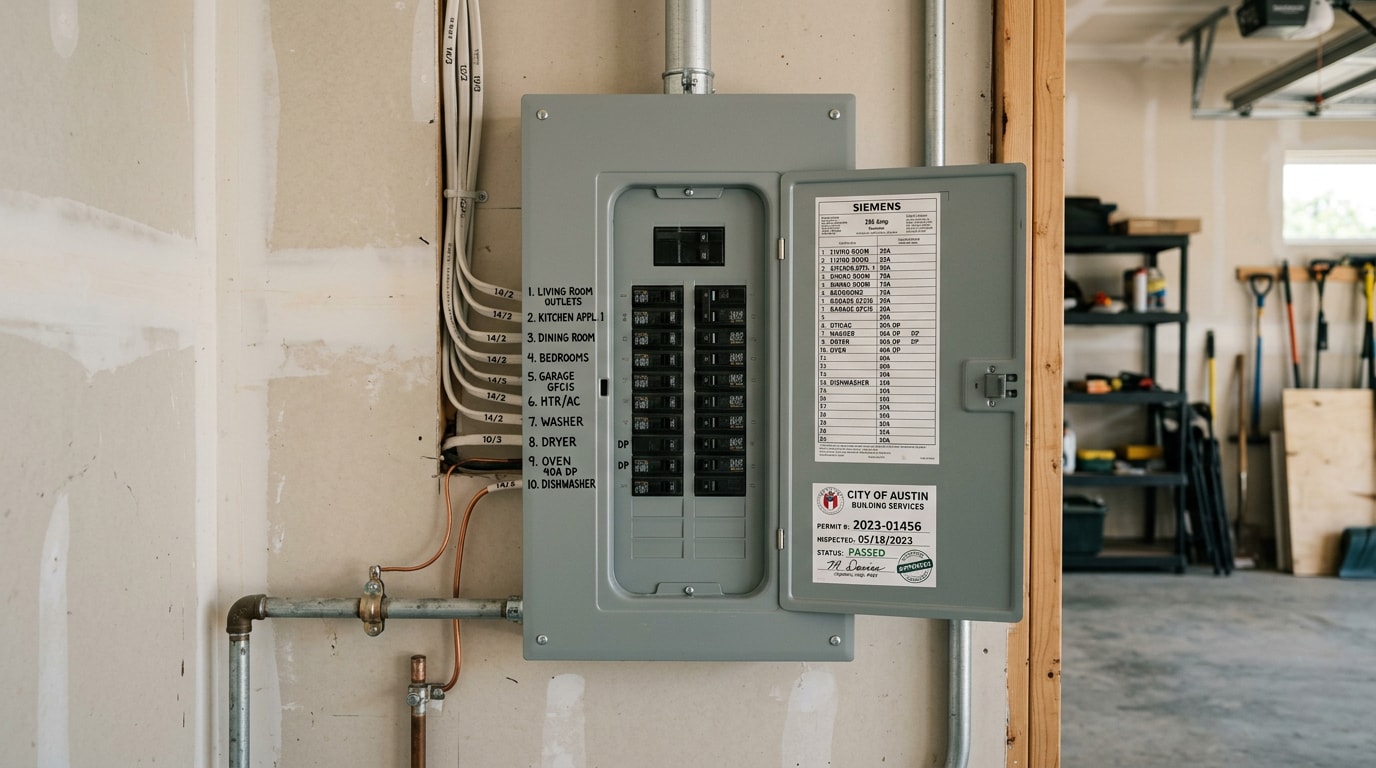
This is the step most sunroom guides skip, and it's where projects get delayed. The City of Soddy-Daisy requires a building permit for almost any addition. Permits are required for new construction, alterations, additions, remodels, or repairs to existing buildings where the value exceeds $1,000 . City inspectors check all trades against the standards of the IBC/IRC 2018 and NEC 2017 for electrical work , so your contractor's plans need to meet those code editions, not whatever edition a neighboring county uses.
A detail many homeowners miss: if your home runs on a septic system, adding a sunroom isn't just a City Hall matter. All new construction and additions to existing buildings where septic tanks are used must be reviewed and approved by Hamilton County Groundwater Protection before building permits are issued . Skipping this step is one of the most common reasons local sunroom permits stall. If your property needs septic review as part of the addition, our septic system design team can coordinate that approval alongside your building permit so the project doesn't stop mid-process.
For footing depth, Tennessee's climate zone doesn't require the deep frost footings you'd see in New England, but the code still applies. Footings must be placed at least 12 inches below undisturbed ground surface and below the locally established frost depth, whichever is greater . Your contractor or the city's building inspector can confirm the exact depth required for your lot; you can also review the underlying rule directly in the International Code Council's foundation chapter.
Benefits of Adding a Sunroom
A sunroom adds livability first, resale value second. Natural light fills a space that often feels cut off from the rest of the house, and the room works for a home office, a plant room, or a spot to watch the water without fighting humidity, pollen, or mosquitoes.
On resale, expect a sunroom to behave like most mid-range additions: it adds buyer appeal and some recouped value, but it won't appraise like a full bedroom. Four-season rooms, since they add genuine conditioned square footage, tend to carry more weight with buyers and appraisers than a screened porch or three-season room with no HVAC tie-in.
Choosing a Sunroom Contractor in Hamilton County
The builder matters as much as the design. Before you sign anything:
- Confirm Tennessee licensing and insurance. Ask for the license number and certificate of insurance, not just a verbal promise.
- Check local permitting experience. A crew that regularly pulls permits in Soddy-Daisy and Hamilton County already knows the IBC/IRC 2018 and NEC 2017 standards local inspectors check against.
- Review real project photos. Ask to see completed sunrooms in the area, not stock catalog images.
- Call references. A five-minute call to a past client tells you more than any sales pitch.
- Get the warranty and communication plan in writing. Know who your point of contact is, how change orders get handled, and what the callback policy looks like after installation.
Our team at Stessa Construction builds additions, foundations, and site work throughout Soddy Daisy and the rest of Hamilton County, which means permit coordination with City Hall and the county groundwater office happens as part of the project, not as a surprise. We also handle the excavation, grading, and foundation work many sunroom-only companies have to subcontract out. If you're weighing a full custom build instead of an extension, our shipping container home builder guide for Cleveland, TN breaks down a very different cost and code path worth comparing.
Ready to see what a sunroom extension would cost on your lot? Get a free estimate and we'll walk the site, check your foundation options, and confirm permit requirements before you commit to a design. You can also learn more about our full range of general contracting work on our homepage.
FAQ
Do I need a permit for a sunroom addition in Soddy Daisy, TN?
Yes. Almost any addition over $1,000 in value requires a City of Soddy-Daisy building permit, and homes on septic systems also need Hamilton County Groundwater Protection approval before the city issues that permit. Confirm current requirements with Soddy-Daisy's Building & Permits department before construction starts.
Does adding a sunroom increase my home's value?
Generally, yes, though it behaves more like a lifestyle upgrade than a high-ROI renovation. Four-season rooms, since they add genuine conditioned living space, typically carry more resale weight than three-season rooms or screened porches.
How long does a sunroom installation typically take?
Most installations run a few weeks to a couple of months, depending on size, foundation type, and whether HVAC or electrical work is involved.
What materials are commonly used for sunrooms?
Common options include glass panels, aluminum framing, vinyl framing, and screen mesh. Aluminum suits four-season rooms that need structural strength, while vinyl and screen fit lighter, seasonal builds.
Does a four-season sunroom need to connect to my home's existing HVAC system?
It doesn't have to, but it should if you want year-round comfort without a standalone unit. Tying into the existing system usually costs less long-term than running a separate mini-split, though your contractor should size the load before connecting it, since an undersized system will struggle on a room with this much glass.
Do I need a new foundation, or can I build on my existing patio or deck?
It depends on what's already there. A solid, properly sized concrete patio can sometimes serve as a base for a screened porch or three-season room, but a four-season room with HVAC and full insulation almost always needs a code-compliant slab or pier foundation sized for the new structure's loads.