Hiring residential framing contractors in Cherokee County, AL means vetting more than price quotes, since the framing phase sets the skeleton, strength, and long-term safety of your home. One undersized header or out-of-square wall can turn into a cracked ceiling or sagging floor years later. This guide covers exactly what to check before you sign anything, plus what framing actually costs in this part of Northeast Alabama.
What a Framing Contractor Actually Does in Cherokee County
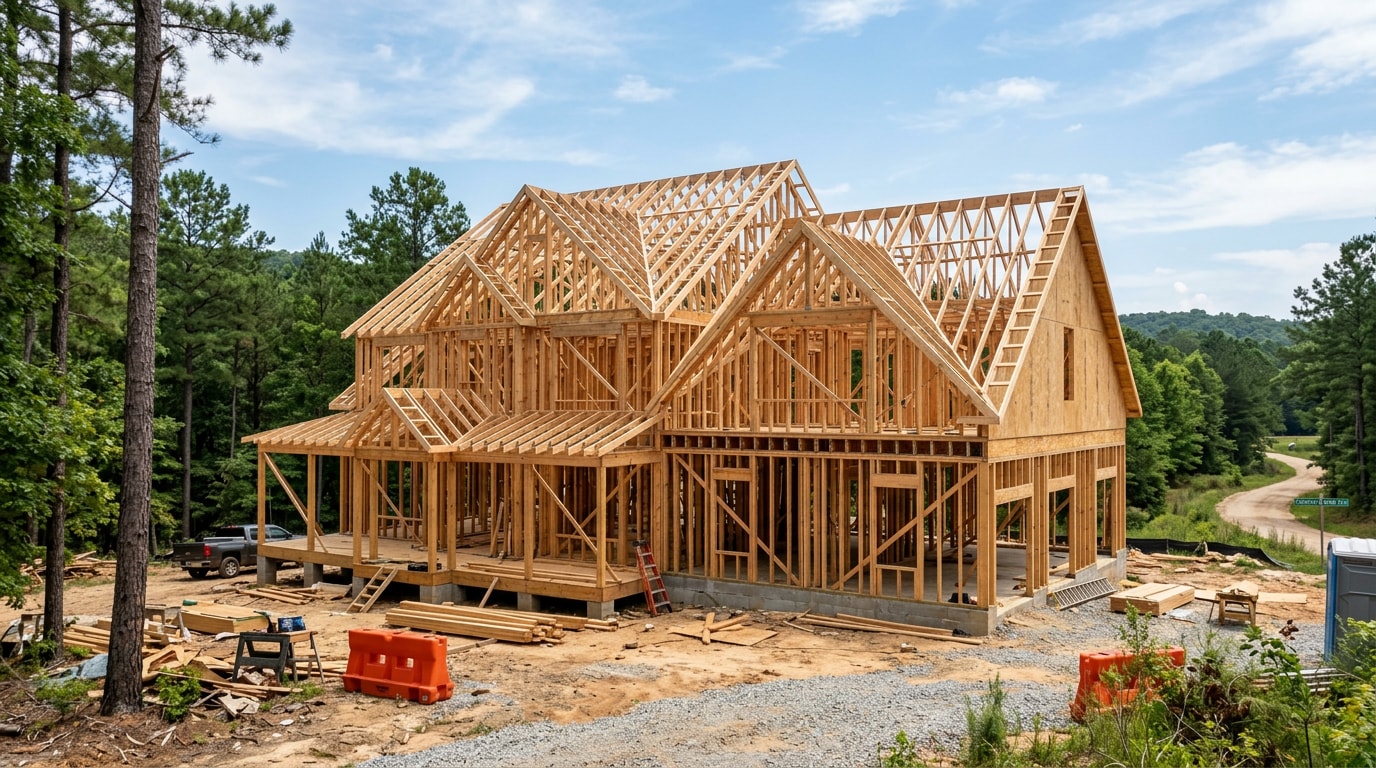
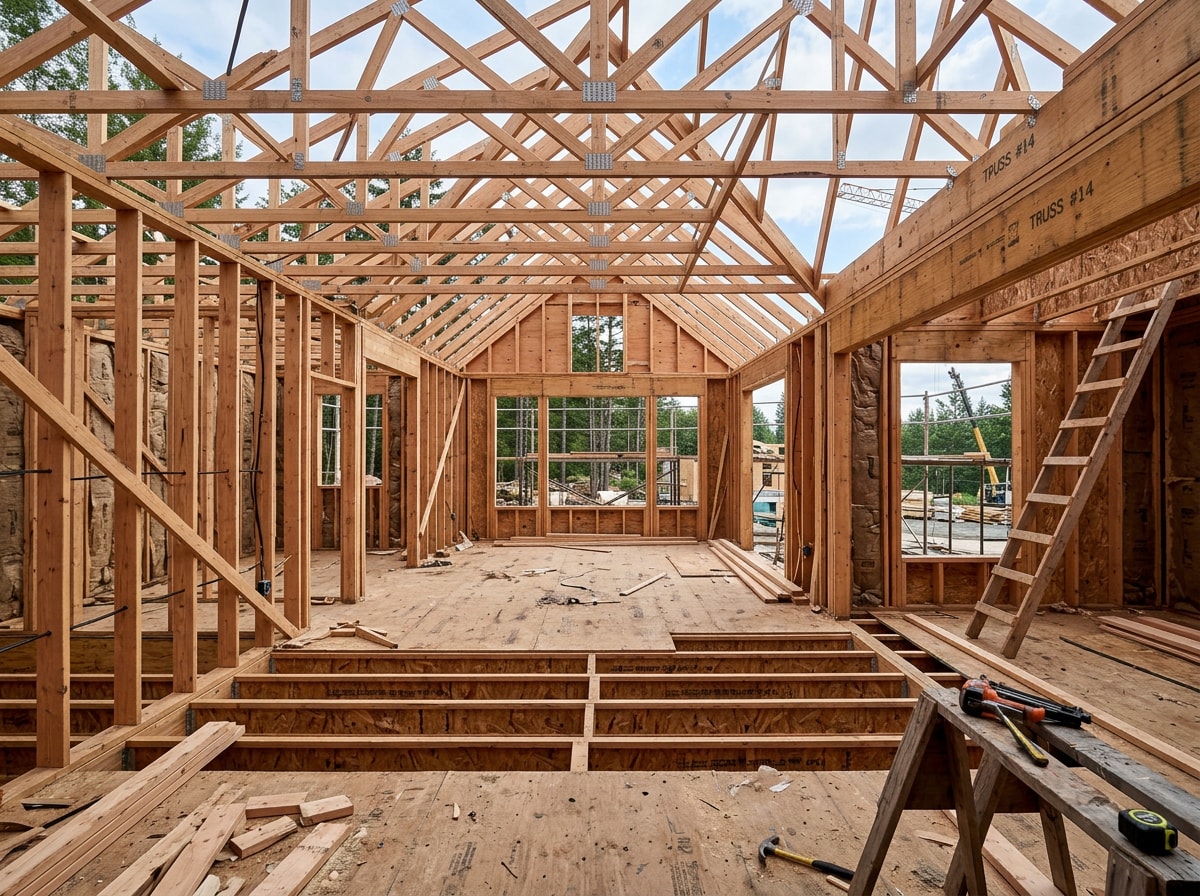
A framing contractor builds the wood or metal skeleton of a house: walls, floors, and roof structures, built from architectural blueprints. They install load-bearing beams and headers, square everything to spec, and confirm the structure meets code before drywall or siding ever goes up.
This stage determines how accurately the final home takes shape. A crooked wall or an undersized header rarely shows up right away. It tends to surface years later as cracked drywall or a bouncy floor.
Framing work in Cherokee County often looks different than it does in denser metro markets. Many homes here sit on slabs or crawlspaces rather than full basements, and rural lot conditions can mean more site prep before framing even starts. A contractor who's worked this terrain understands how the structural plan needs to adapt to it, whether that's a custom build or a home addition tied into an existing structure.
Homeowners planning a new build can review our general contracting services to see how framing fits into the broader construction timeline, from custom home construction through final finishes.
Why the Framing Phase Makes or Breaks the Build
Framing is arguably the most structurally critical phase of any build. A single error, like a misaligned load-bearing wall, incorrect joist spacing, or an out-of-square foundation tie-in, can compromise the entire structure. Fixing it after walls are closed up costs far more than getting it right the first time.
A skilled local framing contractor brings more than carpentry skill to the job. They deliver level, square framing, keep the work compliant with building codes, and coordinate with electricians, plumbers, and HVAC installers who need accurate wall cavities and chases. They also account for Alabama's humidity and storm patterns when choosing materials, not just whatever's cheapest at the yard.
Qualifications to Verify Before You Hire
Treat a handful of qualifications as non-negotiable before anyone sets foot on your lot. Skip this vetting, and you're taking on risk the contractor should be carrying instead.
Licensing
Whether a framing contractor needs a state license depends on your project's cost. In Alabama, a residential home builders license from the Home Builders Licensure Board is required once the undertaking, including labor and materials, exceeds $10,000. Smaller jobs may fall outside that requirement, but it's worth confirming where your project lands rather than assuming.
Ask candidates to prove any license they claim. A contractor who can't produce one, or who gets vague when asked, is a red flag worth taking seriously. You can verify a license directly through the Alabama Home Builders Licensure Board in a few minutes.
Insurance
Any framing contractor on your property should carry general liability insurance and workers' compensation before a single worker steps on site. Without workers' comp coverage, an injured worker could potentially hold the homeowner personally liable for medical costs, a risk most people don't realize they're exposed to until it's too late.
Ask for a certificate of insurance directly from the contractor, not just a verbal assurance, and confirm with the insurer that the policy is active. Federal jobsite safety rules also matter here: under OSHA's residential construction standard, workers six feet or more above lower levels must be protected by guardrails, safety nets, or personal fall arrest systems. You can review the full OSHA residential fall protection requirements directly.
Experience
An experienced framing contractor has logged real hours across different home designs, framing methods, and material types, and can point to projects similar in scope to yours. Years in business is a reasonable, though imperfect, proxy for competence.
Don't stop at the owner's résumé. Ask about the framing crew's experience too, since the people doing the actual nailing and squaring matter just as much as whoever signs the estimate.
Local Cherokee County Experience
The strongest local framing contractor already knows the county's permitting quirks, soil conditions, and weather patterns, which means fewer surprises and fewer change orders mid-project.
If a contractor has worked in Centre, Cedar Bluff, Leesburg, Gaylesville, Piedmont, or Collinsville, that's a good sign they understand how rural-county realities differ from a city building department. One detail that surprises a lot of homeowners: Cherokee County does not enforce zoning regulations or building permit requirements outside the incorporated towns, which shifts how permitting works compared to most metro counties. A contractor who already knows this distinction between incorporated and unincorporated areas will save you a confusing phone call later.
Verified Reviews and Clear Communication
Look for consistent, detailed reviews on Google Business, Facebook, or similar platforms. A handful of five-star ratings with no written detail tells you less than a few reviews describing specific projects. Ask for references directly, and visit a past job site in person if you can.
A trustworthy contractor also offers transparent quotes, answers questions without dodging specifics, and sticks to the timelines they commit to. Vague communication upfront tends to stay vague once the work starts.
Ready to compare notes on your project? Get a free estimate and ask us directly about licensing, crew experience, and timeline before you commit to anyone.
What Framing Costs in Cherokee County, AL
Framing pricing varies by scope, but national ranges give you a reasonable starting point for comparing quotes. Rural Cherokee County labor rates often land toward the lower-to-middle end of these ranges, though lumber costs apply regardless of location.
| Project Type | Typical Cost per Sq. Ft. | Notes |
|---|---|---|
| Full house framing | $7–$16 | Includes labor and materials |
| Labor only | $4–$10 | Owner supplies materials |
| Materials only | $3–$6 | Lumber, sheathing, hardware |
| Garage framing | $4–$5 | Simpler structure, fewer openings |
| Home addition | $6–$10 | Higher cost when tying into existing structure |
Get a detailed, written quote before work starts. A number that sounds too low for the scope of work usually means something's been left out, not that you found a bargain.
Contracts, Scheduling, and Material Quality
Contracts
Never let framing work begin without a signed contract. A solid agreement should spell out pricing, scheduling, payment terms, and what happens if either party is dissatisfied with the work.
A written agreement protects both sides. It's standard practice, not a sign of distrust. If a contractor pushes back on putting terms in writing, treat that as a warning sign rather than a formality to skip.
Scheduling Expectations
Framing is one of the most time-sensitive phases of a build, since nearly every other trade waits on it to finish. Walk through the project schedule in detail upfront so expectations line up before work starts.
Build in realistic buffer time, not just a best-case estimate. A timeline that sounds too fast for the scope of work is worth questioning before you sign.
Quality of Materials
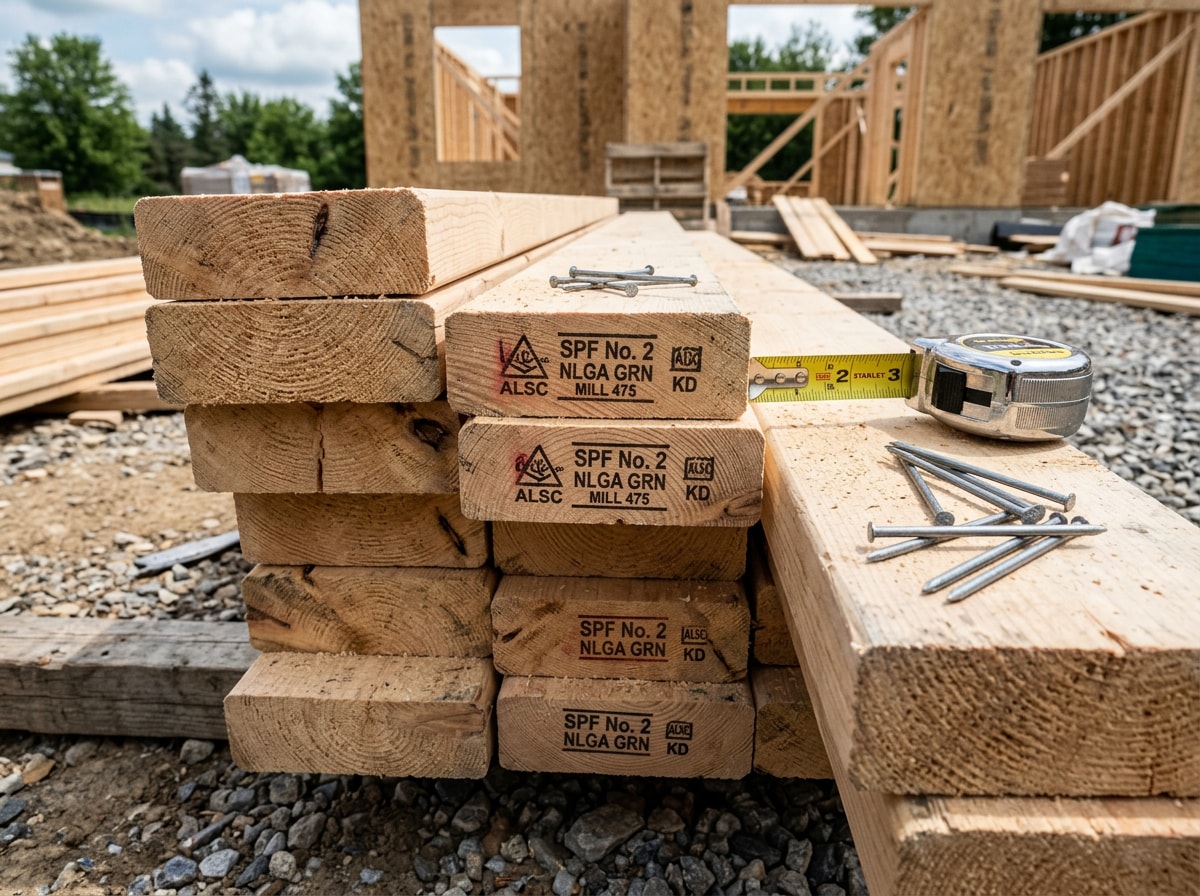
Check that the lumber being used meets proper grading standards, with S-P-F (spruce-pine-fir) grading as the common benchmark, and confirm boards are straight rather than warped or twisted. This isn't a cosmetic detail. The International Residential Code requires studs to meet a minimum grade, and load-bearing dimension lumber must carry a grade mark from an accredited inspection agency precisely because material quality ties directly to structural safety. You can review the IRC wall construction requirements that most Alabama jurisdictions reference during framing inspections.
Where to Find Framing Contractors Near You in Cherokee County
Start by asking local builders, remodelers, or lumberyards for subcontractor referrals. These professionals usually know who shows up on time and frames cleanly. A search for "framing contractor near me," paired with a review of Google ratings and project photos, is a reasonable next step.
The Cherokee County Chamber of Commerce maintains a local business directory worth checking before you search statewide. The county's permit records can also show which contractors have recently pulled permits for similar residential work in incorporated areas, a practical way to see who's actively building nearby. Since the county spans several small towns, widen your search to include Centre, Cedar Bluff, Leesburg, Gaylesville, Piedmont, and Collinsville rather than limiting it to one zip code. Our guide on finding building companies near you in Cherokee County walks through the vetting process in more depth if you're comparing full-service builders alongside framing specialists.
Once you've narrowed a shortlist, check our Cherokee County service area page to confirm coverage, browse recent projects, then reach out through our contact page to request a quote. You can also learn more about our full scope of work on the Stessa Construction homepage.
FAQ
How much does it cost to hire a framing contractor in Cherokee County, AL?
Full house framing typically runs $7 to $16 per square foot, with labor alone running $4 to $10 per square foot depending on project complexity. Rural Cherokee County pricing tends toward the lower-to-middle end of that range, though lumber costs can still shift the total regardless of where you build.
Do I need a permit for framing work in Cherokee County, AL?
It depends on where your lot sits. Cherokee County does not enforce zoning regulations or building permit requirements outside the incorporated towns, but any paid contractor must still be licensed through the Cherokee County Probate Office. If your property falls inside an incorporated town like Centre, check with that town's building inspector, since city limits typically do enforce their own permit and inspection process.
Does a framing contractor need a state license in Alabama?
Yes, once the project's cost exceeds $10,000 in combined labor and materials. Below that threshold, Alabama's Home Builders Licensure Board doesn't require a state license, though local permit rules may still apply depending on the jurisdiction.
How long does it take to frame a house?
Framing a typical house takes about 5 to 8 weeks from start to finish. Weather, material delivery delays, and crew size can all push that timeline longer, so build in some buffer before committing to a move-in date.
How do I find a good framing contractor?
A general contractor can often refer a trusted local framing contractor they've worked with before, and that established relationship can mean better rates and more consistent scheduling. Beyond referrals, interview a few candidates directly, check their license and insurance, and choose based on fit and local experience, not just price.
Reviewed by the Stessa Construction team, licensed general contractors serving Northeast Alabama and Southeast Tennessee. Have a framing question specific to your lot? Contact us directly.