Site work contractors in Cleveland, TN turn raw Bradley County land into a build-ready lot before the first foundation form ever goes up. Get the sequencing wrong and every trade behind the dig sits idle; get it right and the whole project stays on schedule. Here's what the work actually includes, what it costs in 2026, and how to vet a crew before you sign anything.
What Does a Site Work Contractor Handle in Cleveland, TN?
"Site work" covers everything that happens between buying a lot and pouring a foundation. In practice, that splits into a handful of distinct scopes that often get bundled into one contract.
Common site work scopes include:
- Land clearing — removing trees, brush, stumps, and debris
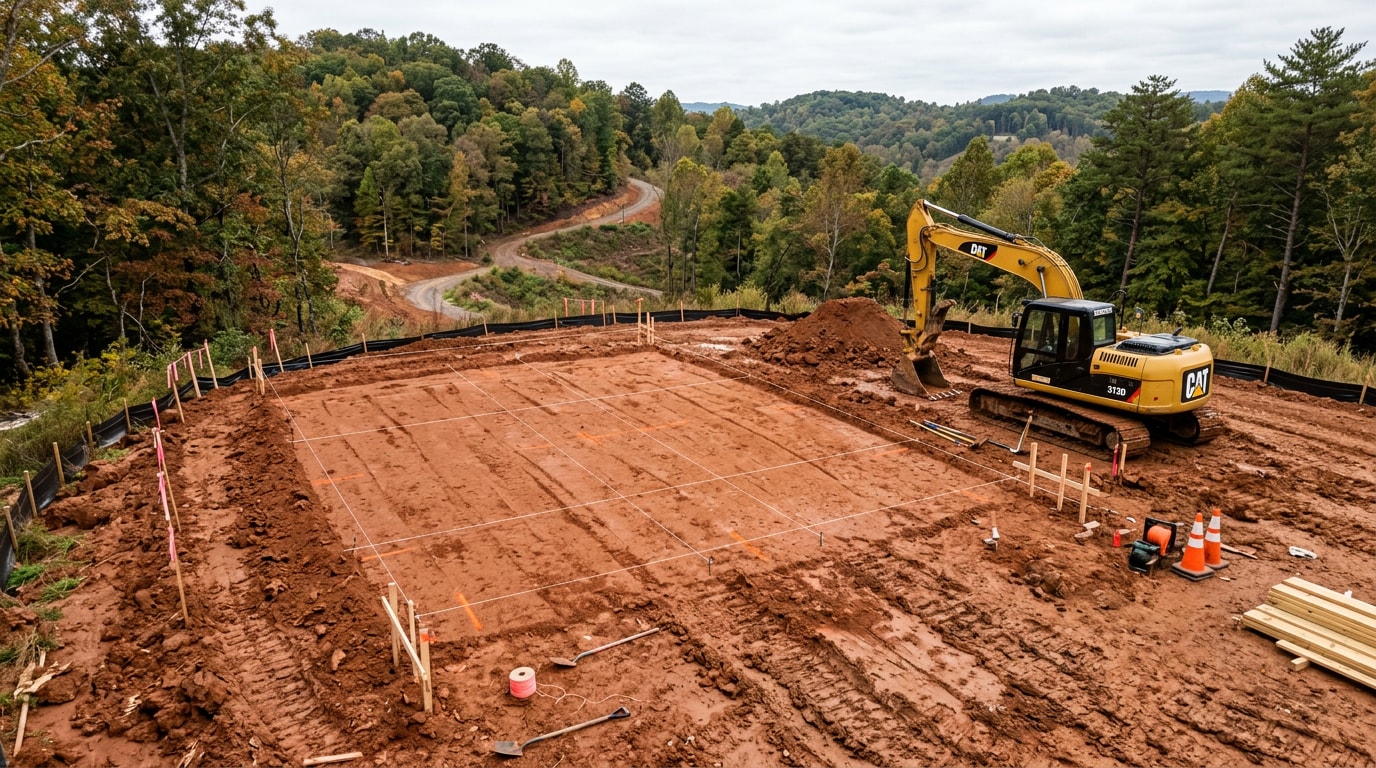
- Rough grading and pad cutting — shaping the lot to the planned elevation
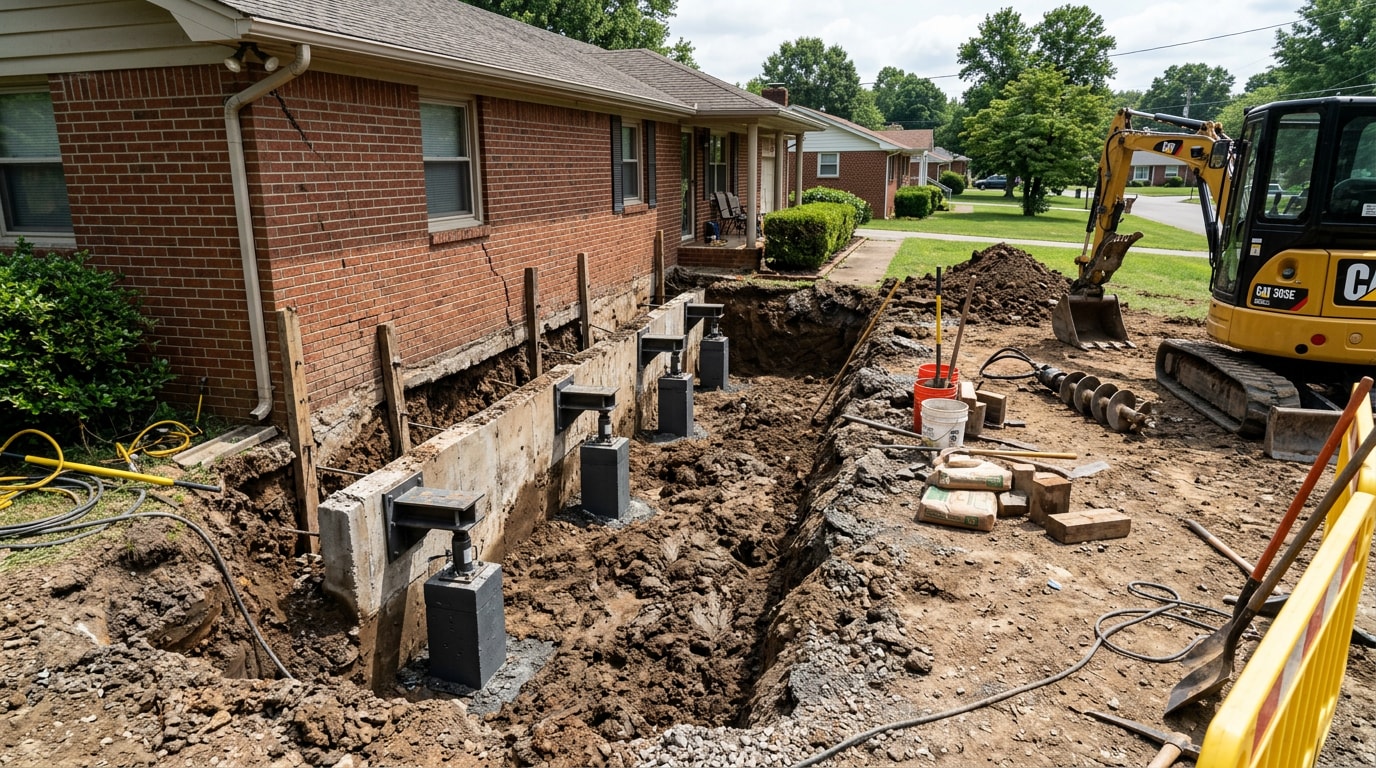
- Footing and foundation excavation — digging to the engineer's depth and dimensions
- Utility trenching — water, sewer, electrical, and gas lines
- Stormwater and drainage work — grading for runoff, detention, erosion control
- Driveway and access excavation — cutting and base prep for new drives
- Septic site preparation — drain field excavation and system grading
A contractor who self-performs most of these scopes with their own equipment fleet keeps a tighter schedule than one subcontracting each piece separately. That matters most on residential new-builds, where foundation crews and framers are waiting on a finished pad.
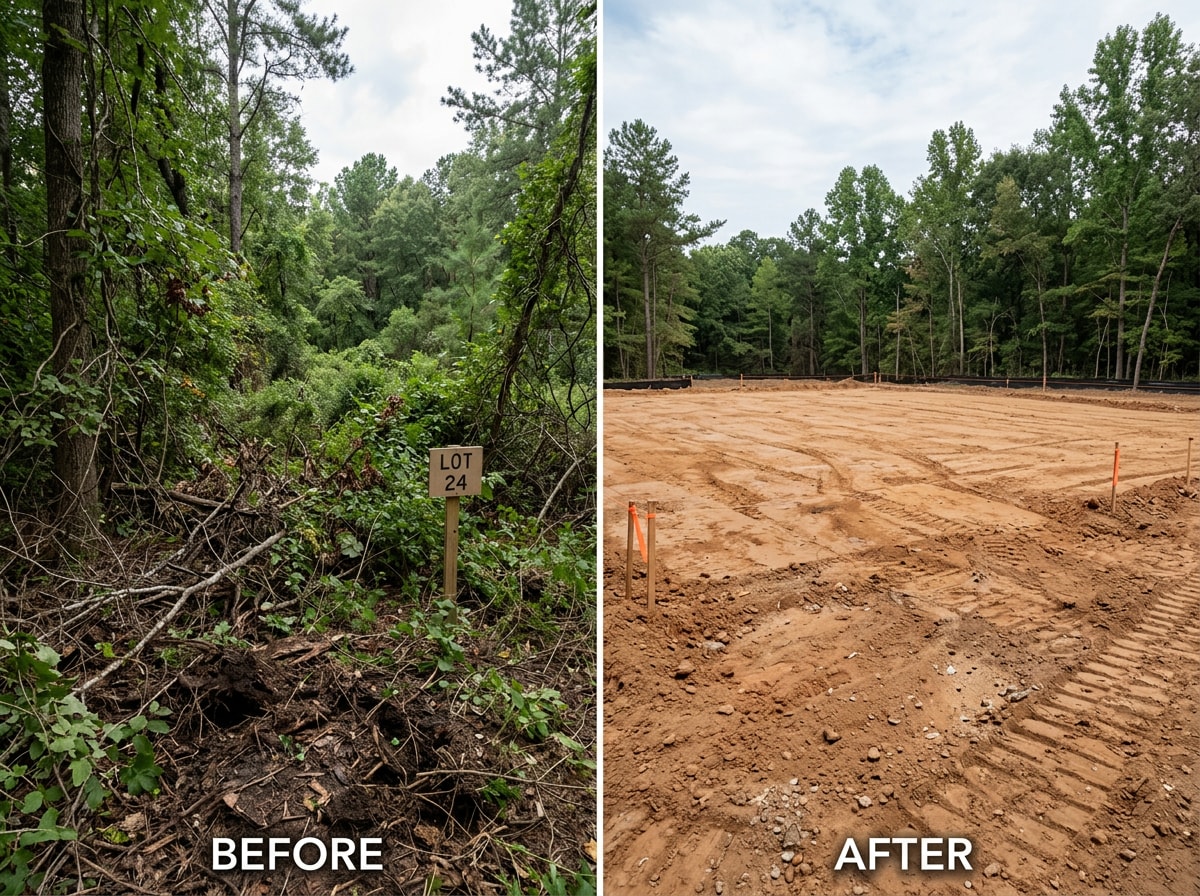
Site Preparation & Grading
Site preparation is the first scope on almost every project: clearing, rough grading, and cutting the building pad to elevation. Fine grading, often done with GPS-guided machine control, is what produces a stable, level pad that won't settle unevenly under a foundation. Browse the full scope on our site work and excavation and land clearing pages, or see how we handle site preparation specifically.
Utilities, Stormwater & Drainage
Utility trenching and stormwater work are a separate scope from grading, even though the same crew often handles both back to back. On a residential job this means trenching for water, sewer, electrical, and gas service, plus drainage work to keep runoff away from the foundation. Poorly planned drainage is one of the most common causes of basement and crawlspace water problems years after a house is finished.
What Site Work Costs in Bradley County in 2026
Pricing on a dig depends on five things more than anything else: equipment access to the site, how much the lot slopes, whether rock sits under the topsoil, how wet the clay gets when crews are digging, and how far spoil has to be hauled off-site. Bradley County's heavy red clay and uneven bedrock pockets tend to push jobs toward the higher end of typical ranges, since wet clay slows digging and often calls for extra hauling or soil stabilization.
The table below reflects the kind of ranges a homeowner should expect to see on a written estimate, not a quote you can plug into a budget without a site visit.
| Project Type | Typical Range | What Drives the Price |
|---|---|---|
| Rough grading / pad prep | $1,500 – $6,000 | Lot size, slope, access |
| Foundation/footing excavation | $2,000 – $8,000 | Depth, soil type, rock |
| Driveway excavation & base | $3,000 – $12,000 | Length, grade, base material |
| Septic site prep & drain field excavation | $4,000 – $15,000 | Soil percolation, system type |
| Utility trenching (water/sewer/electric) | $10 – $30 per linear foot | Depth, soil, number of lines |
Rock removal, dewatering a wet trench, or hauling spoil a long distance can push any of these ranges well past the high end. A real number only comes from a site walk. Get a free estimate once you have a scope in mind.
How a Site Work Project Gets Sequenced
Sequencing determines whether the trades behind a site work crew — foundation setters, framers, utility installers — start on schedule or sit idle waiting on dirt.
Call Before Anyone Digs
Tennessee law requires anyone digging, grading, or demolishing to contact Tennessee 811 before breaking ground, and that includes work done with hand tools, not just machinery. Tennessee's Underground Utility Damage Prevention Act requires everyone who digs to contact Tennessee 811 at least three working days' notice before starting a project. A reputable contractor builds that waiting period into the schedule instead of treating it as optional paperwork.
Footing Excavation to Code Depth
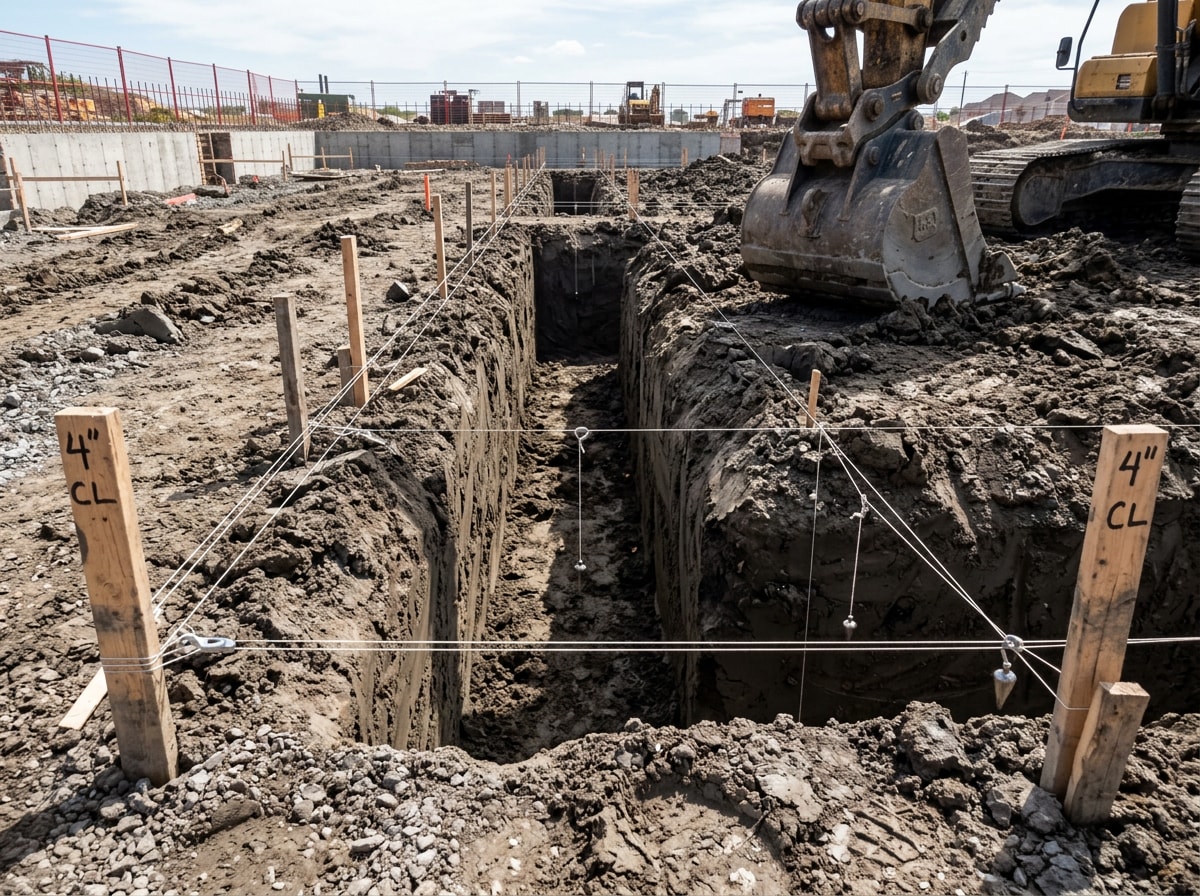
Footings that sit too shallow can heave with Tennessee's freeze-thaw cycle, and that movement cracks structures above them after a few winters. Exterior footings shall be placed not less than 12 inches below the undisturbed ground surface, and where applicable, the depth of footings shall also conform to additional frost-protection requirements. Most Tennessee jurisdictions, including Bradley County, set the local frost line at 12 inches, so the 12-inch code minimum and the frost depth typically line up here — but a contractor should confirm the number with the local building department before digging, since it's set locally, not nationally.
Trench Safety Isn't Optional
Trenching is one of the more dangerous parts of site work, which is why federal rules exist specifically for it. Each employee in an excavation shall be protected from cave-ins by an adequate protective system, except when excavations are less than 5 feet in depth and examination of the ground by a competent person provides no indication of a potential cave-in. Ask any contractor you're vetting how they classify soil and what protective system they use once a trench passes that 5-foot mark — a vague answer is a red flag.
Explore our full excavating contractor services for a closer look at how these scopes come together on a typical project.
Septic Site Work Has Its Own Rulebook
Septic system site work in Tennessee runs through a different approval process than almost everything else on a build, and it's a detail a lot of homeowners miss until it delays their schedule. Any individual or property owner who wants a subsurface sewage disposal system installed or an existing faulty system repaired must get a Septic System Construction Permit, with applications handled through the appropriate Environmental Field Office.
That permit comes from the state's environmental agency, not the county building department that signs off on your grading or foundation permit. Practically, that means septic site prep, excavation, and drain field installation should be planned and permitted early, before grading finalizes pad elevations around the system.
The EPA's septic guidance also notes that evaluating the drainfield for signs of system failure, such as standing water or unequal drainage, is part of a proper system inspection — a useful baseline if you're buying a property with an existing system rather than installing new.
Related services:
Slopes, Retaining Walls & Erosion Control
Bradley County's rolling terrain means a meaningful share of site work projects also need slope management, not just flat-pad grading. Lots with grade changes often need a retaining wall to hold a cut slope, erosion control during construction to keep clay off neighboring property, or slope stabilization where a driveway or pad sits below the natural grade.
Pairing grading and masonry scopes with one contractor usually means fewer handoffs and fewer finger-pointing moments if drainage doesn't work as planned.
How to Choose a Site Work Contractor in Cleveland, TN
Local familiarity with Bradley County's clay soil, frost depth, and permitting process matters more than a flashy website. Before signing anything, ask:
- Do they call Tennessee 811 and run a private utility locate beyond what the utility companies mark on their own?
- Do they classify soil and use a protective system on trenches deeper than 5 feet, per OSHA's excavation standard?
- Do they dig footings to the full local frost depth, not just the bare code minimum?
- Do they self-perform grading, excavation, and drainage, or subcontract each piece separately?
- Can they show recent, similar local projects rather than stock photos?
A contractor who answers all five without hedging is one worth getting a quote from. You can see examples of completed grading, excavation, and foundation work on our projects page.
Serving Cleveland and Surrounding Communities
Site work coverage from our crews extends across Cleveland, TN and Bradley County, with the same crews familiar with local terrain, clay conditions, and permitting steps on every job. We also work nearby in Chattanooga, Ooltewah, and Hamilton County. If you're planning a new build in the area, our guide to home builder construction in Bradley County covers what happens after the dirt work wraps up.
Whether a lot sits inside Cleveland city limits or out on rural acreage, the goal is the same: a site that's ready to build on, graded correctly, and permitted the first time. Visit our homepage for the full range of general contractor, excavating, masonry, and septic services, or get a free estimate to start with a site visit.
FAQ
What types of site work services are available in Cleveland, TN?
Local contractors typically offer land clearing, rough grading, footing and foundation excavation, utility trenching, stormwater drainage, driveway excavation, and septic site preparation. Most residential projects bundle several of these into one scope.
What is the difference between excavation and grading?
Excavation is digging and moving earth, including cutting, hauling, and trenching for foundations or utilities. Grading is shaping that earth to correct slopes and elevations so a site drains properly and sits on stable ground. Both carry safety requirements under OSHA's Excavations standards at 29 CFR Part 1926, Subpart P .
How much does site work cost in Cleveland, TN?
Most residential scopes fall between $1,500 for basic pad grading and $15,000+ for septic site prep with a difficult drain field, with utility trenching priced separately by the linear foot. Soil conditions, access, and how much rock is present move the number more than anything else. A written estimate after a site visit is the only reliable figure.
Do I need a permit to grade or excavate my property in Bradley County?
Often, yes. Land-disturbing activity typically requires a local permit, and disturbing an acre or more can also trigger state stormwater requirements. Septic work requires a separate state permit through TDEC's Environmental Field Office, which is a different process than your building permit.
How deep do footings need to be in Tennessee?
Exterior footings must be at least 12 inches below undisturbed ground and extend below the locally established frost line, whichever is deeper. Most Tennessee jurisdictions, including Bradley County, set that frost line at 12 inches, but your local building department has the final say.
What areas do site work contractors serve near Cleveland, TN?
Most Cleveland-area crews work throughout Southeast Tennessee, including Bradley and Hamilton Counties, with some projects extending toward Chattanooga and nearby communities. Confirm coverage directly with the contractor for your specific address.
How do I choose the right site work contractor?
Check that they call Tennessee 811 before digging, follow OSHA trenching protections on deeper excavations, dig footings to full local frost depth, and self-perform most of the scope rather than subcontracting every piece. Ask to see recent local project photos, not stock images.